What MCP actually costs you
Model Context Protocol has become the default way to connect an assistant to real systems. It is genuinely useful, and the bill arrives somewhere people rarely look.

Two years ago, wiring a language model into a real system meant writing the glue yourself. Every tool needed a schema, every schema needed a handler, and the whole lot was welded to whichever model you happened to be using. Change the model and you rewrote the plumbing.
The Model Context Protocol removed that. An MCP server exposes a set of tools; an MCP client connects to it; any assistant that speaks the protocol can use any server. One integration surface instead of a grid of them.
It has been adopted fast, and in most of the conversations I have had this year the enthusiasm runs ahead of the operating experience. So: what it is good for, and what it costs.
What it genuinely solves
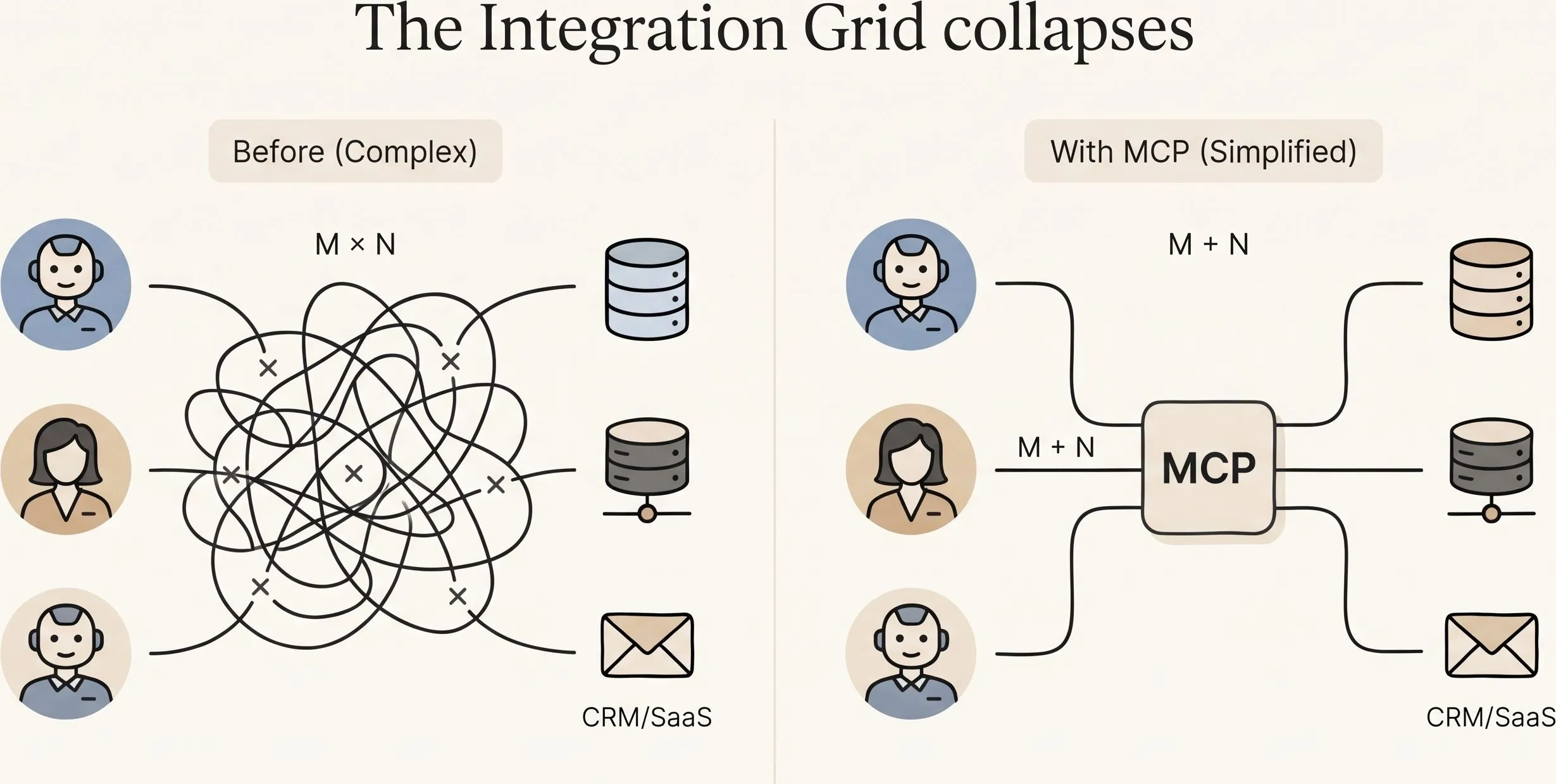
The integration grid collapses. Before, connecting m assistants to n systems meant roughly m × n integrations. Now it is m + n. For an organisation with a warehouse, a CRM, a ticketing system and three different assistants in use across teams, that is not a marginal improvement.
Servers are portable. A server written for one client works in another. The investment survives a change of assistant, which is not nothing given how quickly that layer moves.
Local execution is a real option. A server can run on the analyst’s own machine over stdio. The data never leaves. For regulated work that is often the difference between a project happening and not happening.
Ownership separates cleanly. The team that owns a system owns its server and its access rules. The team building the assistant does not need to understand the warehouse schema. That boundary matters more at scale than any technical feature of the protocol.
What it costs
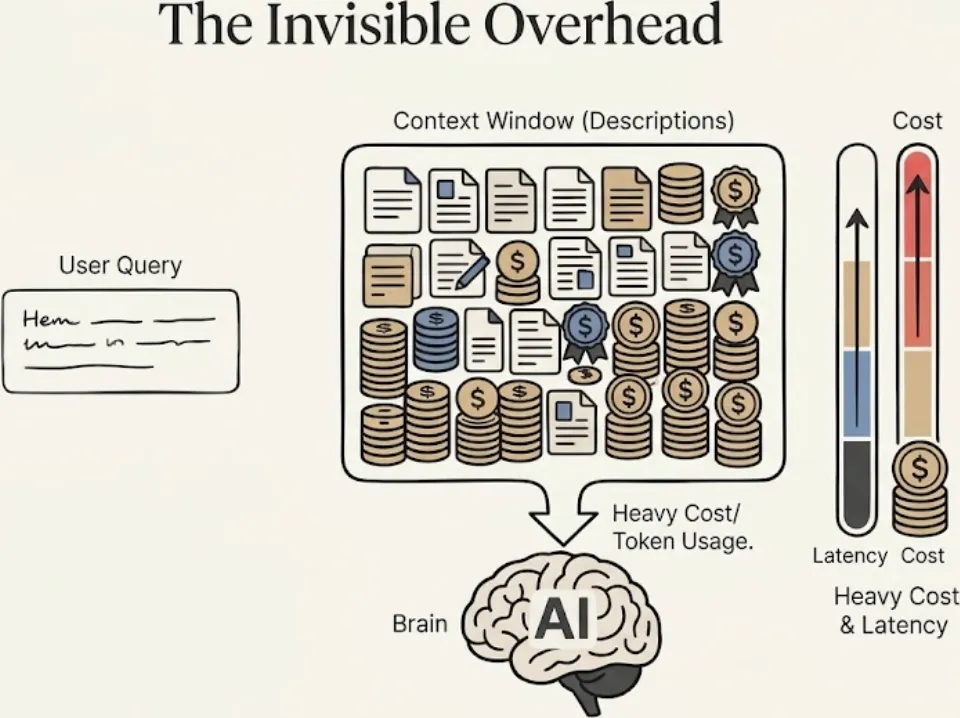
Context. This is the one people miss. Every tool on every connected server is described in the model’s context window before the user types anything. A handful of servers can mean dozens of tools and tens of thousands of tokens of permanent overhead — paid on every request, in latency as well as money. I have seen setups where more than half the context was tool definitions for tools nobody called that session.
Accuracy degrades with breadth. Give a model sixty tools with overlapping names and it will sometimes choose the wrong one. The failure is quiet: you get a plausible answer derived from the wrong source. Ten well-named tools beat sixty comprehensive ones, consistently.
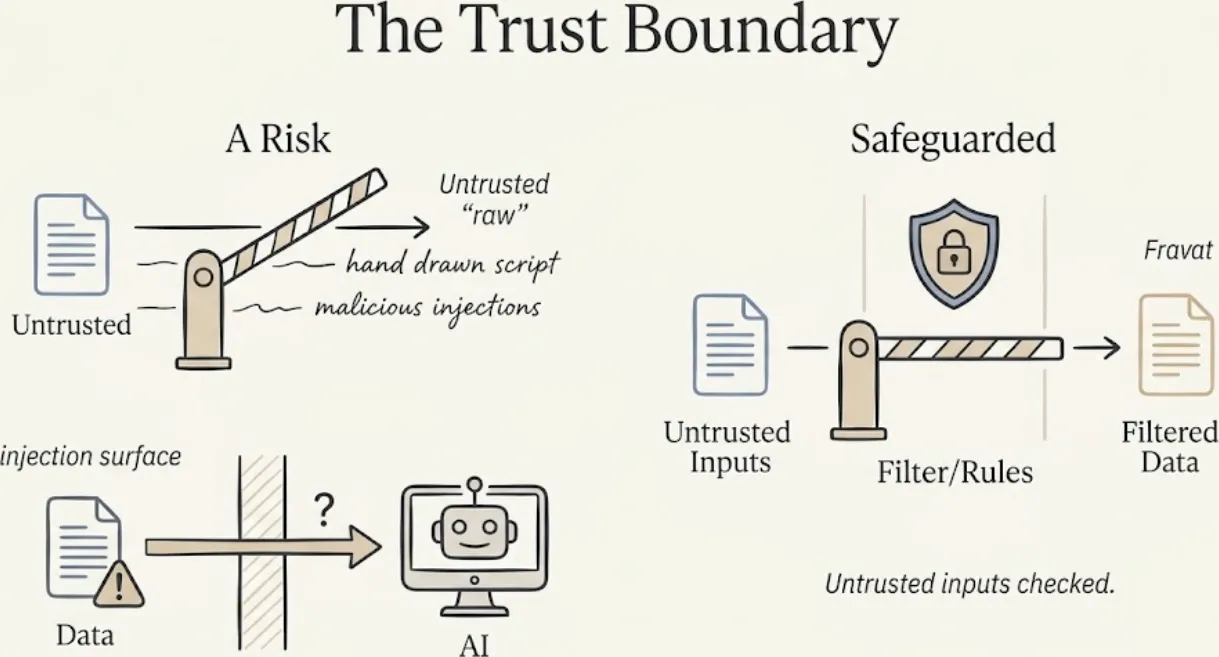
The trust boundary moves, and not everyone notices. Connecting a server means sending it whatever the assistant decides to send. It also means tool results re-enter the model’s context, which makes them an injection surface — content returned by a tool can carry instructions. Treat tool output as untrusted input, the same way you would treat a form field.
Supply chain. Community servers are convenient and mostly unaudited. A server is code with network access and whatever credentials you hand it. The convenience of a one-line install is exactly the problem.
Debugging is poor. When a model declines to call a tool, there is usually no error. Nothing fails. You get an answer that quietly skipped a step, and you only notice if you were checking.
How I would actually deploy it
Connect few servers, deliberately. The instinct to wire up everything available is the single most common mistake, and it degrades both cost and accuracy at once.
Prefer narrow servers over kitchen-sink ones. A server with six well-scoped tools is more useful in practice than one exposing forty.
Where the platform supports deferred tool loading — definitions fetched on demand rather than front-loaded — use it. It directly addresses the context problem and is underused.
Measure the overhead. Count tokens with and without each server attached. The number is usually larger than people guess, and it makes the “should we connect this?” conversation concrete instead of aesthetic.
Audit what you connect, and scope credentials to the minimum. “It worked in the demo” is not an access review.
Where this leaves me
MCP is the right abstraction. The integration grid was a genuine problem and this genuinely solves it, which is why adoption has been quick and why I expect it to stay.
But it is infrastructure, and it is being adopted with the enthusiasm usually reserved for features. The organisations getting value from it are the ones treating a server connection as a decision with a cost — context, latency, trust, maintenance — rather than as a free capability. The ones struggling connected nine servers in an afternoon and are now wondering why the assistant is slower, pricier and occasionally confident about the wrong table.
The protocol is not the hard part. Deciding what to plug into it is.